
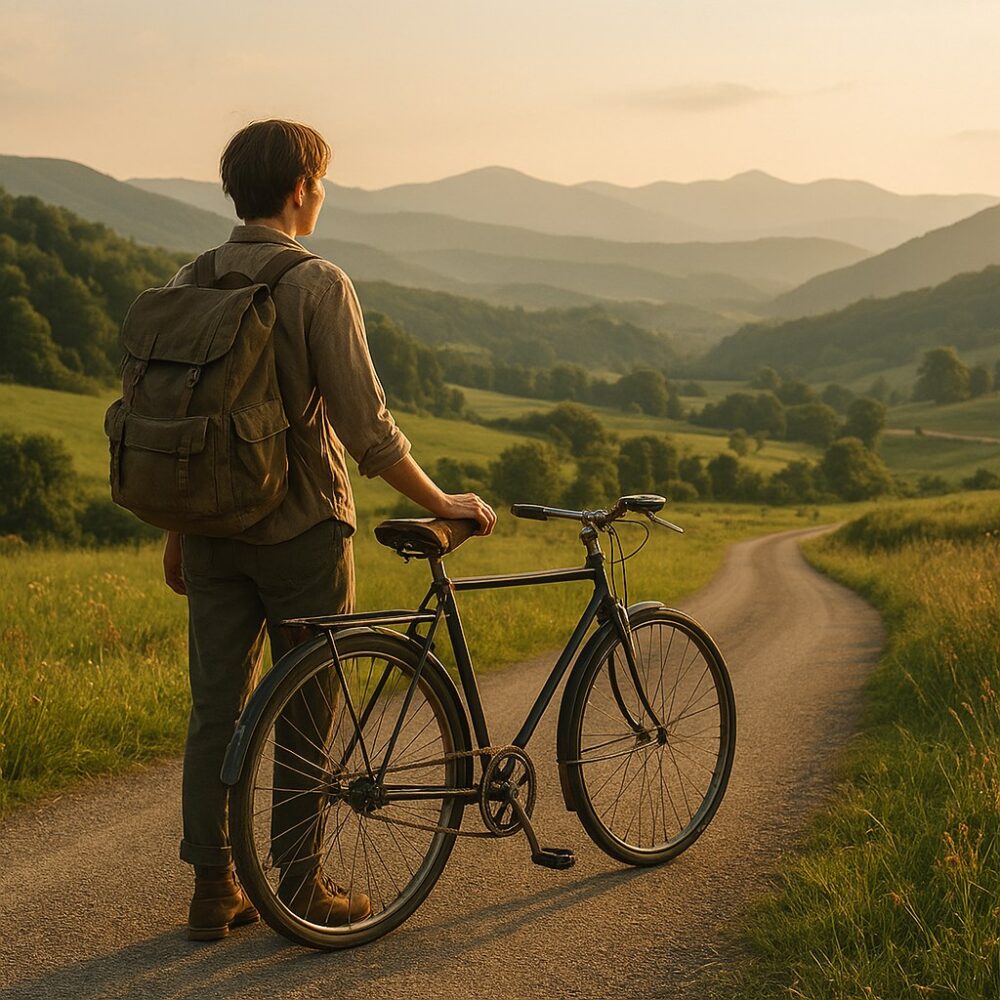
The average holidaymaker now moves through destinations at breakneck speed. A city break here, a whirlwind tour there, ticking landmarks off an endless list before flying home exhausted. Yet beneath this frenetic pace, a quiet revolution has been gathering momentum. Slow travel, a philosophy that prioritises depth over distance, is reshaping how thoughtful travellers approach their journeys. More importantly, it offers a compelling answer to one of tourism’s most pressing questions: how do we explore the world without destroying the very places we love?
Sustainable tourism has evolved from a niche concern into a global imperative. The travel industry accounts for roughly 8% of global carbon emissions, with aviation contributing the lion’s share. Meanwhile, overtourism has strained beloved destinations from Venice to Barcelona, degrading local quality of life and environmental health. Slow travel presents a practical framework for addressing these challenges whilst simultaneously enriching the travel experience itself.
Understanding the Slow Travel Movement
Slow travel emerged from the broader slow movement, which began in Italy during the 1980s as a protest against fast food culture. The philosophy champions a deliberate deceleration, encouraging people to savour experiences rather than rushing through them. Applied to travel, this means spending longer in fewer places, choosing surface transport over flights where possible, and engaging meaningfully with local communities rather than treating destinations as backdrops for photographs.
The concept has gained considerable traction in recent years. Research from Booking.com found that 76% of global travellers expressed a desire to travel more sustainably, with many specifically citing slower, more immersive experiences as their preferred approach. This shift reflects growing awareness that the conventional tourism model, built on rapid consumption and constant movement, delivers diminishing returns for both travellers and host communities.
What Distinguishes Slow Travel from Conventional Tourism?
Traditional tourism often operates on a scarcity mindset. Limited holiday allowances drive travellers to maximise their itineraries, cramming multiple destinations into a single trip. The result is a superficial engagement with place: the famous cathedral glimpsed between other obligations, the local restaurant chosen for convenience rather than authenticity, the destination reduced to a collection of Instagram moments.
Slow travel inverts this logic entirely. A slow traveller might spend two weeks in a single small town, developing routines and relationships that remain invisible to the passing tourist. They shop at local markets, learn fragments of the language, and discover the neighbourhood café that never appears in guidebooks. This extended presence transforms travel from consumption into participation, creating richer memories whilst distributing economic benefits more equitably.
The Environmental Case for Slowing Down
The environmental argument for slow travel rests primarily on transport choices. Aviation generates approximately 2.5% of global CO2 emissions, but its total climate impact, including effects from high-altitude emissions, roughly doubles that figure. A single long-haul return flight can produce more carbon per passenger than many people generate in an entire year through other activities.
Slow travellers typically favour trains, buses, and bicycles over aircraft. Rail travel produces approximately 80% fewer emissions per kilometre than flying. A journey from London to Edinburgh by train generates around 13 kilograms of CO2 compared to roughly 87 kilograms for the same journey by air. Extended across millions of journeys, these choices accumulate into significant environmental benefits.
Beyond Carbon: The Broader Ecological Impact
Transport represents only part of the equation. Slow travel patterns also reduce pressure on fragile ecosystems. Rapid tourism concentrates visitors in famous locations, often exceeding their carrying capacity. The Galápagos Islands, Machu Picchu, and numerous coral reef systems have all suffered degradation from excessive visitor numbers. Slow travel, by contrast, encourages dispersal. Spending three weeks exploring rural Portugal rather than rushing through Lisbon, Porto, and the Algarve spreads economic benefits across regions that rarely receive tourist attention.

Accommodation choices matter too. Slow travellers often stay in locally owned guesthouses, small hotels, or rental properties rather than international hotel chains. These establishments typically have smaller environmental footprints and retain more money within local economies. Research from the World Travel and Tourism Council suggests that locally owned accommodation keeps approximately 65% of tourism spending within the destination, compared to just 15% for large international chains.
The Cultural and Social Benefits
Sustainable tourism encompasses more than environmental protection. Cultural sustainability, ensuring that tourism strengthens rather than erodes local traditions, matters equally. Slow travel fosters genuine cultural exchange rather than the transactional relationships that characterise mass tourism.
Consider the difference between a day-tripper and a slow traveller in a small Italian village. The day-tripper purchases perhaps a coffee and a postcard, generating minimal local benefit whilst contributing to congestion. The slow traveller, staying for a week, develops relationships. They learn that Maria makes the best focaccia on Tuesday mornings. They join the evening passeggiata. They attend the village festival that tourists rushing between Florence and Rome never witness. These interactions preserve cultural vitality by demonstrating that traditional ways of life retain value in the modern economy.
Economic Distribution and Local Prosperity
The economic case for slow travel proves equally compelling. Tourism leakage, where spending flows out of local economies to international corporations, remains a persistent problem in the industry. Studies suggest that in some developing countries, up to 80% of tourism revenue leaks back to foreign-owned companies. Slow travel patterns naturally counter this tendency.
Extended stays in fewer locations encourage spending patterns that benefit small, independent businesses. The slow traveller cooks meals using ingredients from local markets, hires local guides for specialised experiences, and purchases crafts directly from artisans. Those interested in deepening this connection to local materials might even explore natural dyeing techniques using regional plants, transforming a simple craft into a meaningful cultural exchange. This spending circulates within communities, supporting employment and reducing dependence on tourism monocultures that can prove devastatingly fragile, as the pandemic starkly demonstrated.
Practical Approaches to Slow Travel
Embracing slow travel does not require unlimited time or substantial wealth. It demands, instead, a shift in priorities and expectations. The following approaches can help travellers transition towards more sustainable patterns:
- Extend stays in single locations. Rather than visiting five cities in ten days, consider spending the entire period in one place, using day trips to explore surrounding areas. This reduces transport emissions whilst deepening engagement.
- Choose surface transport. Rail networks across Europe, Japan, and increasingly other regions offer comfortable, efficient alternatives to flying. Overnight trains can even save accommodation costs whilst adding romance to the journey.
- Travel during shoulder seasons. Visiting destinations outside peak periods reduces strain on local infrastructure, supports year-round employment, and often delivers more authentic experiences without crowds.
- Select locally owned accommodation. Guesthouses, small hotels, and locally managed rentals channel spending directly to communities whilst offering more personal, characterful experiences than international chains. Properties with abundant natural light particularly enhance wellbeing during longer stays.
- Engage with local food systems. Shopping at markets, eating at family-run restaurants, and learning about regional cuisine connects travellers to place whilst supporting agricultural communities.
- Learn basic language skills. Even rudimentary attempts to communicate in local languages transform interactions and demonstrate respect that locals invariably appreciate.
Addressing Common Questions About Slow Travel
Is Slow Travel Only for Extended Holidays?
Not necessarily. Whilst long journeys naturally suit the slow travel philosophy, its principles can apply to shorter trips. A long weekend spent thoroughly exploring a single city neighbourhood, rather than frantically covering the entire metropolis, embodies slow travel values. The essential element is intentionality: choosing depth over breadth, quality over quantity, presence over documentation.
Does Slow Travel Cost More?
Paradoxically, slow travel often proves more economical than rapid tourism. Staying longer in one place reduces transport costs between destinations. Accommodation providers frequently offer discounts for extended stays. Self-catering facilities in rental properties allow cooking with local ingredients rather than relying on restaurants. The main cost involves time, which remains a genuine constraint for many workers. However, even within limited holiday allowances, choosing one destination rather than several reduces both expense and environmental impact.

How Does Slow Travel Relate to Digital Nomadism?
The rise of remote work has created natural synergies with slow travel. Digital nomads, unmoored from fixed workplaces, can embrace extended stays that would prove impossible for conventional employees. Countries from Portugal to Thailand have introduced specific visas catering to this demographic. When practised thoughtfully, this lifestyle combines the depth of slow travel with continued professional productivity, though it requires careful attention to local housing markets and community impacts to avoid contributing to gentrification pressures.
The Future of Sustainable Tourism
Slow travel represents more than an individual lifestyle choice. It signals a broader recalibration of tourism’s purpose and methods. Destinations increasingly recognise that visitor numbers alone make a poor measure of tourism success. Amsterdam has actively discouraged certain types of tourism whilst promoting longer stays. New Zealand’s tourism strategy explicitly prioritises quality over quantity, seeking visitors who stay longer, spend more, and engage more deeply with local culture.
The infrastructure supporting slow travel continues to improve. European rail networks are expanding, with new high-speed routes and revived night trains making overland journeys increasingly practical. Platforms facilitating house-sitting, home exchanges, and long-term rentals reduce accommodation costs for extended stays. Remote work policies, accelerated by the pandemic, have freed millions to reimagine the relationship between work, place, and travel.
Challenges remain, certainly. The aviation industry continues to grow, driven by budget carriers making weekend city breaks accessible to unprecedented numbers. Social media often rewards quantity over depth, encouraging the collection of destinations rather than their meaningful exploration. Climate change itself threatens many beloved destinations, from alpine ski resorts facing shortened seasons to low-lying islands confronting rising seas.
Yet the trajectory seems clear. As environmental awareness grows and overtourism backlash intensifies, the tourism industry faces pressure to transform. Slow travel offers a coherent vision for that transformation: tourism that enriches rather than depletes, connects rather than consumes, and leaves destinations better for having been visited. The journey, it turns out, matters more than the checklist of destinations. Perhaps it always did.
Conclusion
Slow travel presents a compelling framework for reconciling the human desire to explore with the planetary imperative to protect. By prioritising fewer destinations, longer stays, and surface transport, travellers dramatically reduce their environmental footprint whilst often discovering richer, more memorable experiences. The benefits extend beyond carbon calculations to encompass cultural preservation, equitable economic distribution, and genuine human connection across boundaries.
The philosophy does not demand perfection. Even partial adoption, choosing rail over air for a single journey, extending a city break into a week-long immersion, or simply resisting the urge to photograph everything and experience nothing, contributes to positive change. Sustainable tourism ultimately depends on millions of individual decisions accumulating into collective transformation. Slow travel offers both a practical guide for those decisions and a reminder of why travel matters in the first place: not to accumulate places, but to be genuinely present within them.